
Restorative
Dental Crowns in Bradford, ON
You can discuss dental crowns at Bradford Dentistry, 184 Holland St W, Bradford, ON L3Z 1H7. Patients come from Newmarket, Innisfil, Holland Landing, East Gwillimbury and nearby towns for assessment and restoration of weakened or damaged teeth.
Dr. Dewji is a general dentist. A crown is recommended according to the condition of the tooth, its support and your overall treatment needs.
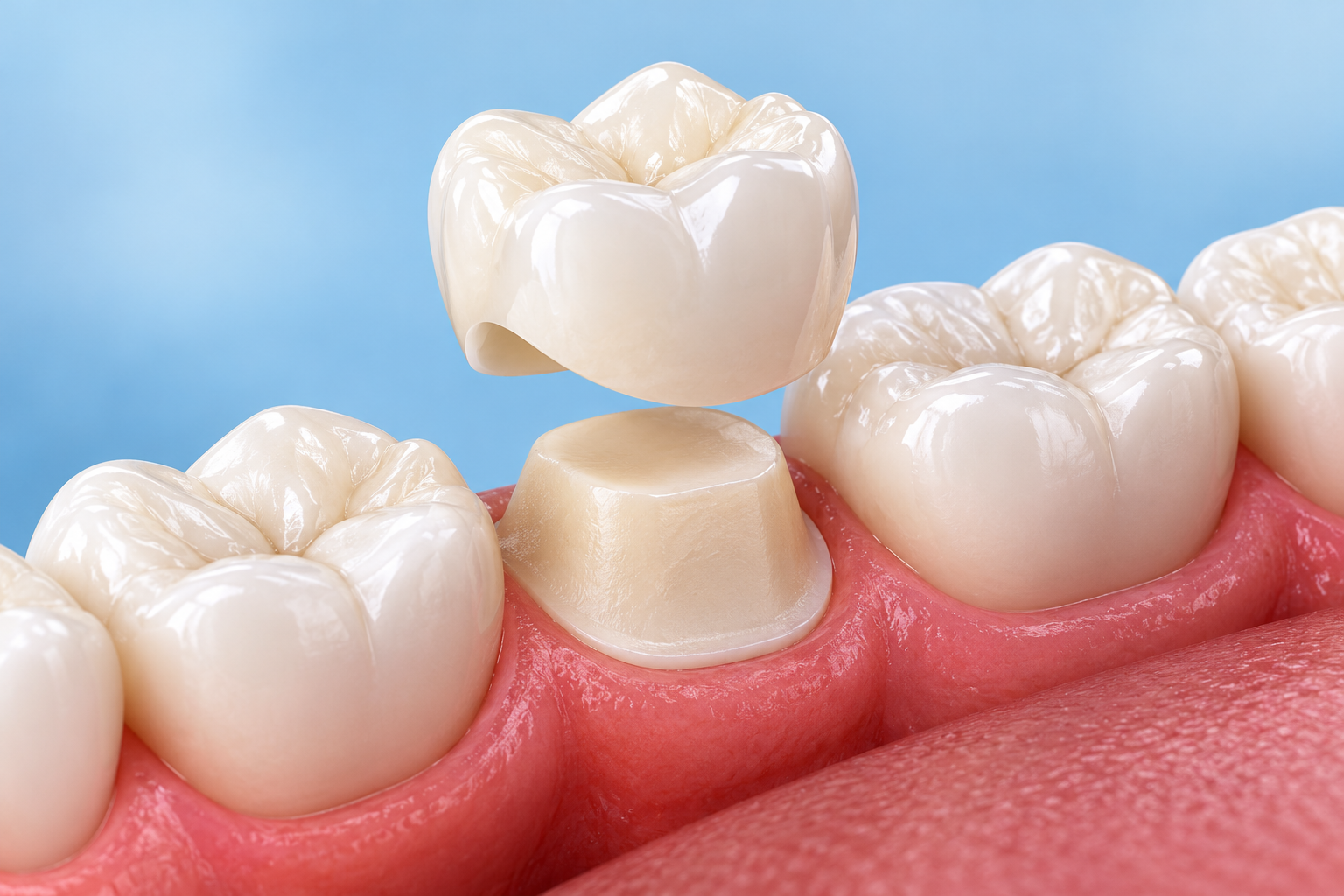
What are dental crowns?
A dental crown is a custom restoration that covers a prepared tooth to restore its shape and provide support. It may be considered when damage is too extensive for a filling, when a tooth is weakened or when protection is needed after root canal therapy. A crown can also be the visible replacement tooth attached to an implant, although the supporting treatment is different.
Planning a crown involves checking the remaining tooth structure, the bite and the gums around the tooth. We discuss precision-fit materials, shade and shape with the aim of creating a restoration appropriate for its position in your mouth. A crown cannot resolve every problem beneath it. Active decay, infection or an unsuitable foundation needs to be assessed before the tooth is prepared.
Who is a good candidate?
You may be a candidate if a tooth has a large filling, a fracture or significant wear and there is enough suitable structure to support a crown. The recommendation depends on how much damage is present and how the tooth functions when you bite. Front and back teeth may have different requirements. We explain why a crown is being considered rather than assume every heavily filled tooth needs one.
Gum health, tooth support, grinding habits and the condition of neighbouring teeth also affect planning. A smaller repair may be reasonable in some cases; in others, further care is needed before a crown. If the tooth cannot be restored predictably, we discuss alternatives instead of placing a crown on a poor foundation. Your preferences, maintenance responsibilities and expected costs are part of the decision.
What to expect at Bradford Dentistry
Assess the tooth
We examine the tooth, existing restorations, gums and bite, with imaging when needed. Tell us about discomfort, sensitivity, previous root canal care and grinding. Findings help determine whether a crown or another treatment is appropriate.
Agree on the restoration plan
We discuss the proposed material, appearance, tooth preparation and any preliminary treatment. Your plan includes the estimate and expected appointment sequence. How the crown is made and when it is ready will be explained as part of your individual plan.
Prepare and record the tooth
The tooth is prepared as required and records are taken for the custom restoration. Protection between treatment stages is arranged where needed. You receive instructions for eating, cleaning and reporting any problems while waiting for the next stage.
Fit and review the crown
The crown's fit, contacts, appearance and bite are checked before it is secured as appropriate. We explain daily care and follow-up. Let us know if biting feels uneven or an area remains uncomfortable after the appointment.
Cost and insurance
Dental crown costs depend on the tooth, the restoration material, preparatory treatment and any additional support or repair needed. A tooth that also requires root canal care has a different overall plan from one needing a crown alone. We provide an estimate and distinguish the crown fee from other proposed procedures, so you can understand the full treatment sequence.
We offer direct billing to Sun Life, Manulife, Canada Life and Green Shield. Crown benefits can be affected by policy limits, replacement rules and the reason for treatment. Bradford Dentistry accepts the Canadian Dental Care Plan (CDCP), but coverage and any authorisation requirements must be checked for your case. Financing for larger treatments is available to discuss; confirm eligibility, payment terms and your expected balance before care begins.
Aftercare and recovery
Follow the instructions given for any temporary restoration and for the final crown. Avoid chewing while the area is numb, and ask about any restrictions specific to your treatment. If a temporary crown comes loose, keep it safe and contact the office; do not use household glue. Persistent sensitivity, discomfort when biting or a crown that feels loose needs assessment.
Brush and clean between teeth daily, paying attention to the gumline where the crown meets the tooth. The natural tooth can still develop decay at the margin, and gum disease can affect its support. Keep routine dental reviews so the fit, bite and surrounding tissues can be checked. Avoid chewing hard objects. Crowns may need maintenance or replacement over time, depending on the tooth, material and your habits.
Patients from across the region
Patients seeking advice about damaged teeth and crowns visit Bradford Dentistry from Newmarket, Innisfil, Holland Landing, East Gwillimbury, Bond Head, Sharon, Queensville, Mount Albert, Cookstown, Gilford and Lefroy. Our practice is in Bradford, not a separate office in each community. Contact us to discuss your needs and arrange the appropriate visit.
Frequently asked questions
How much do dental crowns cost in Bradford?
Crown costs depend on the restoration and any care the tooth needs first. The material, preparation and additional procedures affect your estimate. We explain the proposed fees and help check insurance or CDCP coverage without assuming all costs will be paid.
Where can I get dental crowns near Newmarket or Innisfil?
You can arrange a crown assessment at Bradford Dentistry near Newmarket and Innisfil. We are at 184 Holland St W, Bradford, ON L3Z 1H7. The appointment helps determine whether a crown suits the damaged tooth or another option is preferable.
Do all root canal teeth need a crown?
Not every root canal tooth needs a crown, but many need added protection. The location of the tooth, remaining structure and biting forces matter. We explain whether a filling or a crown is appropriate for the specific tooth.
Can a crowned tooth still get a cavity?
The natural tooth beneath a crown can still develop decay, particularly near the margin. Daily cleaning and dental reviews remain necessary. Tell us about sensitivity or food catching around the crown so the area can be checked.
How long does a dental crown last?
A crown's lifespan varies with its foundation, material and ongoing care. Grinding, decay and damage can lead to repair or replacement. We review crowns during routine visits rather than promise a fixed number of years for every patient.
What should I do if my crown comes off?
Keep the crown safe and contact the dental office for advice. Avoid chewing on the exposed tooth and do not try household glue. The tooth and crown need to be assessed before deciding whether the crown can be refitted or further care is needed.
Related services
Join the family
Ready to join the Bradford Dentistry family?
Whether it's your first visit or your fortieth, we'll greet you by name. Accepting new patients of all ages.